
 in content lists or on the content page.
SELF-PRODUCED ENERGY
Energy which users save or produce locally using renewable energy sources.






Solutions for generating local energy
Closed project (2007-2012)
Self-produced energy means energy which a user or a group of users has saved or produced locally using renewable energy sources. Renewable energy, smart power networks and energy efficiency are vital in the pursuit of a sustainable economy and society. In Europe, the demand for renewable energy and energy efficiency services is already estimated at EUR 8 billion, but supply is not yet nearly sufficient to meet this demand.
Wide interest in self-generated energy
Up to one in four homeowners is considering renovations to their heating or power systems within the next two years. Interesting potential solutions include solar panels, pellets, heat pumps, smart home automation, insulation, thermal window systems and LEDs.
This is the case according to a survey conducted by Taloustutkimus for Sitra (Saisiko olla lähienergiapalveluja? – Local energy services, anyone?), in which Finnish homeowners were asked about their opinions on various energy solutions and new local energy services. According to the survey, consumers need an online service, for example, which can identify and compare different self-produced energy options and provide information to support their decision-making.
Sitra has promoted building practices that incorporate self-generated energy in several projects. One of them is the Tampere Housing Fair, where the Lantti house was built as a energy-plus house. The Low2No project looked at ways of encouraging residents to adopt a sustainable lifestyle. Together with Airice, the Finnish market gardeners’ association and Saarelan Energia, Sitra also carried out a pilot project seeking profitable ways of replacing oil-based heating systems and electricity with a hybrid energy solution based on renewable wind power and geothermal energy. The results of the pilot project will be published in the first half of 2013.
The Edelläkävijät project has identified pioneering organisations and individuals leading the way in energy efficiency, energy saving and the use of renewable energy sources in Finland. The Hinku file (Finnish only) contains almost 300 individuals, organisations or businesses which have adopted renewable energy solutions pioneers in an innovative way. On the basis of their experiences, the project strives to dismantle administrative obstacles, disseminate best practices and promote new ways of business.
Generating energy must be easy
The growth in the popularity of generating one’s own energy is hampered by the fact that feeding power into the network is not easy, as well as a support policy which favours centralised energy solutions. Comparing different solutions and finding the solution that best suits one’s needs is not easy, either. Information on locally-produced energy should be easily accessible in one place, and residents should be able to process it according to the information they require. Also, a solution to the problem of periodic output needs to be found.
For a clean energy market to come into being, and for the desired services to be created, we need to identify and eliminate administrative obstacles. With these facts in mind, we called together a working group in the spring of 2012 to prepare a discussion paper on the challenges of small-scale renewable energy generation and potential solutions.
The discussion paper lists the major challenges of small-scale renewable energy creation and proposes potential solutions. Small-scale energy generation also necessitates new land use planning practices, which have been developed in the Skaftkärr and Ekotaajama projects.
The technological preconditions for market development are already in place. However, since small-scale production of solar energy or other renewable energy has not got off the ground in market terms in Finland, Sitra commissioned an analysis of whether models such as a cooperative of small-scale energy producers and the Mankala model could help promote small-scale energy production in Finland. According to the analysis, a cooperative of small-scale producers would not seem to offer a solution. However, a model combining small-scale production with industrial-scale wind power generation might work.
New business around self-produced energy
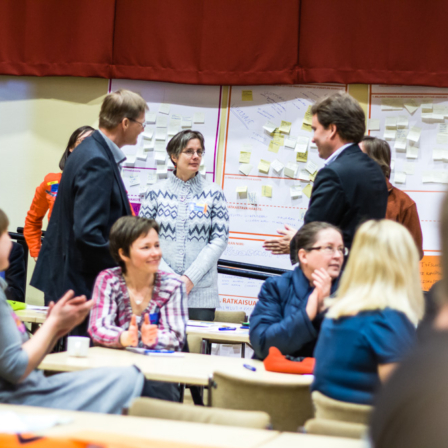
Services and operating models using locally-generated energy were considered from the perspective of SMEs, housing companies and the residents of single-family homes or leisure residents. Some ideas for service concepts were generated via workshops, with the goal being to find solutions which would help residents save energy or produce energy based on renewable sources and turn it into a profitable business.
Demand also exists for new service solutions, which would offer residents an easy, economical and reliable way of acquiring and maintaining energy equipment. There is still room in the market for service providers willing to grasp this business opportunity. The creation of user-oriented energy renovation services has been promoted in, for example, the EEMontti project. Sitra has also reviewed international service and financial models and established a workshop to discuss their application in Finland.
The Finnish Local Renewable Energy Association will continue the work to promote the production of local renewable energy.





LATEST